From the Spellbound Journal
One Quotation, More to Say: The Quote Explosion Toolkit
Move beyond naming techniques. Explore a quotation’s words, place in the text and wider ideas, then shape your notes into an argument.
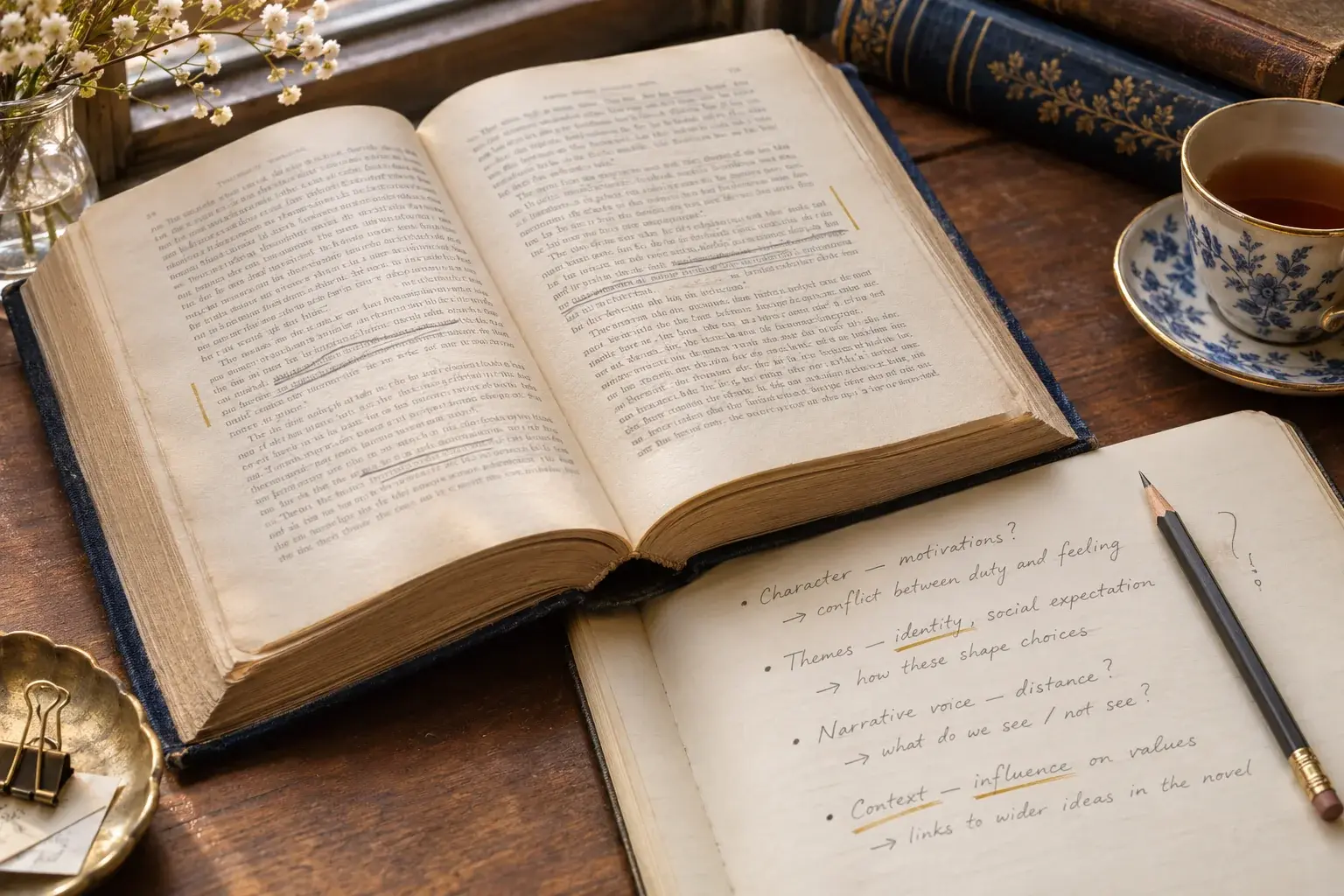
You have chosen a quotation. You can spot a technique. Then comes the difficult part: explaining what the writer is doing and why it matters.
In my Quote Explosion Toolkit post on Instagram, I shared a way to open up that thinking. The aim is to explore one quotation carefully enough that you have something worth saying about the text. Here, I’ll take you through the approach with a short example from Macbeth.
Begin with an interpretation
Before you start labelling language, ask what the quotation reveals. Does it change your understanding of a character, develop a theme or introduce a tension?
Take Macbeth’s question after Duncan’s murder: “Will all great Neptune’s ocean wash this blood / Clean from my hand?”
At its simplest, Macbeth is looking at blood on his hands. But his question also suggests that he cannot imagine escaping what he has done. That gives you a starting interpretation: Shakespeare presents guilt as something Macbeth cannot simply wash away.
Keep the question you are answering beside your notes. If your essay is about guilt, this interpretation gives your analysis a direction. For a different question, you may need a different focus or quotation.
Look closely at the writer’s choices
Now choose the details that help you explain your interpretation.
The scale of the “ocean” makes the task of cleaning one hand seem enormous. Macbeth imagines a vast quantity of water, yet doubts that even this would be enough. The contrast suggests that his sense of guilt has grown beyond the physical evidence of the crime.
The reference to Neptune, the Roman god of the sea, extends that scale. Macbeth’s private act is imagined against a power much greater than himself. You could explore this alongside his fear that the murder has consequences he can no longer control.
Naming the allusion is useful only if you explain what it adds. Ask yourself: if Shakespeare had written “some water” instead, what would be lost?
Ask why this moment matters
A quotation belongs somewhere in a text. Look at what happens before and after it, and whether it connects with a later moment.
Macbeth speaks these words soon after killing Duncan. His fear interrupts any simple idea that gaining the crown will make him secure. Later, Lady Macbeth’s imagined handwashing offers another way to explore the relationship between guilt and attempts to remove its traces.
That connection helps you discuss the play’s development. You are following an idea through the text rather than treating each quotation as a separate item to memorise.
Connect context to the interpretation
Context should help explain your reading. It does not need to become a separate paragraph of facts about Shakespeare’s lifetime.
Here, the killing of a king raises questions about legitimate authority and the violation of political and moral order. If you bring that context into your answer, connect it directly to Macbeth’s response: his guilt can be read as recognition that this murder cannot be undone by removing its visible evidence.
Be precise about what your chosen detail supports. A relevant connection is more useful than a long list of historical information.
Turn the notes into an argument
Once you have explored the quotation, decide which ideas belong in your paragraph. You do not need to include every note.
For example:
Shakespeare presents guilt as a consequence Macbeth cannot control. By questioning whether an entire ocean could clean his hand, Macbeth makes the blood seem impossible to remove. The vast scale of the image suggests that the effects of Duncan’s murder reach far beyond the physical act itself.
This is one possible reading, not a model to memorise. Notice how the explanation keeps returning to the same idea. The quotation, language detail and interpretation work together.
Try your own quotation explosion
Choose one short quotation from a text you are studying. Write a note for each of these prompts:
- What does it reveal about a character or theme?
- Which word or method helps create that meaning?
- Why does it matter at this point in the text?
- Is there a relevant contextual connection?
- What larger argument could these observations support?
Then write one paragraph using your strongest connections. Check your teacher’s guidance and the requirements of your particular task when deciding what to include.
My original Quote Explosion Toolkit post introduces the worksheet and explains how to request it through Instagram. You can use the prompts above to begin straight away.